Mobile Trolling Motor Installation and Repair in North Port, Charlotte & Sarasota County, FL
New trolling motor installs, GPS motor upgrades, battery and wiring configuration, and full repair work handled at your dock, boat lift, or driveway. Minn Kota, Rhodan, and Power-Pole systems installed with proper wire gauge and marine-grade wiring on every job.
Trolling Motor Work That Comes to Your Boat
A trolling motor is one of the highest-value upgrades on a fishing boat and one of the more common things to break over time. Cable steering wears out from constant use. Foot pedals fail from cable fatigue and switch wear. Wiring corrodes at the head from years of salt exposure. Shaft seals leak. GPS anchor functions like Spot-Lock stop working reliably. And bad installs, particularly the wrong wire gauge for the run length or improper battery configuration, cause trolling motors to fail early even when the motor itself is sound.
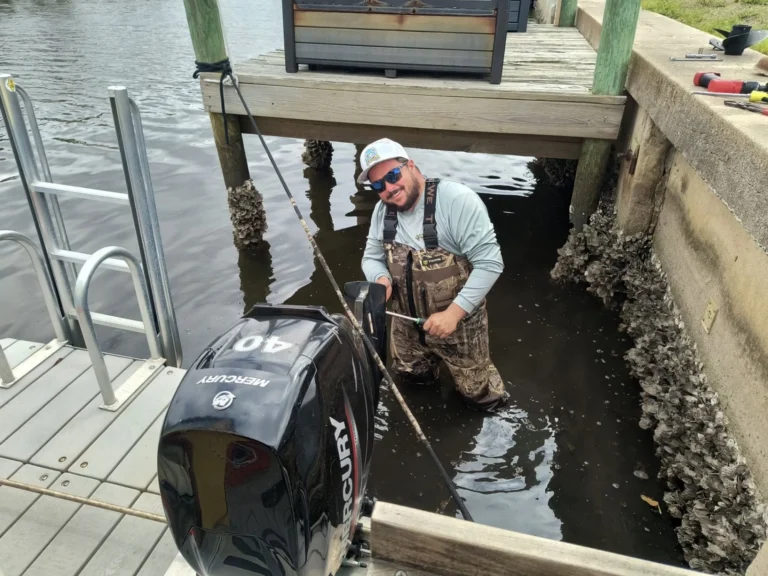
S&S Marine Repair handles mobile trolling motor installation and repair across Charlotte and Sarasota County. Owner and technician Spencer Iannuzzi installs new trolling motors and repairs existing ones at your boat, using marine-grade wiring, proper conductor sizing, correct battery configuration, and manufacturer-spec parts. Common work includes new bow-mount installs, GPS motor upgrades from older non-GPS units, wiring and battery setup for higher-thrust systems, and repair of existing motors from every major brand we service. We also install and repair Power-Pole shallow water anchoring systems that pair naturally with a trolling motor on flats and bay boats.
Trusted by Boat Owners Across Southwest Florida
About Our Approach to Trolling Motor Work
S&S Marine Repair is a family-owned mobile marine service based in North Port, Florida. Owner and technician Spencer Iannuzzi handles the trolling motor work personally, using marine-grade wire, proper conductor sizing, marine-grade circuit protection, and manufacturer-spec parts on every install and repair. When you book trolling motor work, the person who quoted the job is the same person who does the install or repair.
Our approach to trolling motor installs is disciplined: size wire gauge correctly for the actual run length, configure batteries correctly for the motor voltage, install marine-grade circuit protection at the battery, use sealed and heat-shrunk connections at every junction, and sea-trial the finished install to verify everything works before considering the job complete. That approach produces installs that stay reliable for the full lifespan of the motor rather than developing wiring or configuration problems in the first season.
New Trolling Motor Installation Work We Handle On-Site
A trolling motor install is more than bolting a motor to the bow. The right install considers wire gauge for the actual run length, battery configuration matched to the motor's thrust rating, integration with the boat's existing chartplotter and electronics, and clean routing that will survive years of saltwater exposure. Cutting corners on any of these produces a motor that underperforms from day one or fails prematurely a season or two into use.
Motor Selection and Mounting
Choosing the right trolling motor for your specific boat is the first step. Motor thrust needs to match boat length, weight, and typical usage conditions. Under-thrust motors struggle in wind and current. Over-thrust motors are unnecessary expense. Once the motor is selected, we install the mounting bracket and quick-release plate at the correct position on the bow, typically as far forward as practical for best steering control, offset from the bow eye, cleats, and any hatches. Precise mounting placement affects both performance and long-term reliability.
Wire Gauge and Battery Configuration
Wire gauge is where most bad installs go wrong. A 36V trolling motor wired with under-gauge conductor drops voltage across the run, losing thrust and running the wire hot. That gets worse when the motor is under load or the battery is partially discharged. We size wire gauge based on the actual run length from the bow to the batteries and the peak current draw of the motor at maximum thrust, plus a safety margin. Battery configuration depends on motor voltage: single 12V for smaller thrust, series-connected 24V for mid-range thrust motors, and series-connected 36V for higher-thrust setups. Each configuration needs the right battery type, capacity, and charging setup.
Circuit Protection and Safety Wiring
Trolling motors draw significant current, particularly under load. Every install includes a properly sized circuit breaker or fuse at the battery to protect the wire and the motor from overload conditions. Missing circuit protection is both a fire risk and a warranty issue on most modern trolling motors. We use marine-grade breakers appropriate to the motor’s current draw and the wire gauge used.
Onboard Charger and Battery Management
Multi-battery trolling motor systems (24V or 36V) require an onboard charger capable of charging the individual batteries independently. We install onboard chargers as part of the setup and wire them correctly so batteries maintain full charge between uses. Improperly wired or under-spec chargers reduce battery life significantly.
GPS and Chartplotter Integration
Modern trolling motors integrate with chartplotters for advanced features like waypoint anchoring, following depth contours, and route planning. GPS-enabled installs include Minn Kota i-Pilot integration with compatible chartplotters, Rhodan GPS integration, network cable and connector setup, and firmware verification on the trolling motor and the plotter.
Ultrex, Terrova, and Ulterra Deployment and Stow Issues
Deployment problems are one of the most common repair calls on Minn Kota Ultrex, Terrova, and Ulterra models. Motor will not deploy from stowed position, will not stow, or gets stuck partway. Common causes include control head board failure, deploy motor issues, wiring corrosion at the base plate connections, and worn deployment mechanisms. Repair depends on which specific component has failed, and we diagnose before quoting the repair.
How Our Trolling Motor Install Process Works
Every trolling motor install follows the same disciplined process because the details matter for long-term reliability.
-
Boat and Motor Assessment
We look at the boat, discuss your typical fishing use, and confirm the right motor for the boat’s size, weight, and how you plan to use it. If you already have a motor selected, we verify it is appropriately sized. If you are still choosing, we recommend based on the boat and use pattern rather than pushing the biggest motor available.
-
Wire Gauge Calculation and Battery Configuration
Before the install, we calculate the required wire gauge based on the actual run length from bow to battery bank and the motor’s peak current draw. Battery configuration gets confirmed based on motor voltage. Onboard charger sizing gets confirmed. All of this happens before any drilling or wiring so the install is right the first time.
-
Mounting, Wiring, and Circuit Protection
Physical mounting of the motor to the bow using the appropriate bracket and quick-release plate. Wire run from bow to battery bank using marine-grade tinned wire in the correct gauge. Circuit breaker or fuse installation at the battery for protection. Sealed connections at every junction. Foot pedal placement for corded models, or wireless remote pairing for wireless-capable motors.
-
GPS Integration and Sea Trial
For GPS-equipped motors, chartplotter network integration and system verification. For all motors, on-water sea trial to verify the motor deploys and stows correctly, steers correctly at speed, holds position properly if GPS-equipped, and does not have any wiring issues under load. Any adjustments happen during the sea trial rather than after.
Trolling Motor Brands We Install and Service
We install and repair the trolling motor brands used regularly across this coast, plus Power-Pole shallow water anchoring systems commonly paired with a trolling motor on the same boat.
Marine Brands We Service & Repair
Factory-level diagnostics and repair for the engines, trolling motors, and electronics powering Southwest Florida boats. Tap any brand for model coverage and brand-specific service details.












Common Trolling Motor Questions from Anglers
Can Minn Kota trolling motors be repaired?
Yes. Most Minn Kota issues are repairable, including steering assemblies, foot pedals, control heads, circuit boards, prop shafts, and shaft seals. Older Minn Kota motors may be limited by parts availability from the manufacturer, but current-generation models are well supported with parts and service documentation. Whether repair or replacement makes more economic sense depends on the age of the motor, the specific problem, and the current cost of a replacement motor. We give an honest assessment as part of the repair estimate.
What is the average lifespan of a trolling motor?
A well-maintained trolling motor commonly lasts 8 to 15 years in salt water, depending on how carefully it is used, how thoroughly it is rinsed after saltwater exposure, and whether the shaft seals get attention before they leak. Freshwater use extends lifespan significantly. Saltwater use without regular flushing and seal maintenance shortens it. The single biggest lifespan factor is how well the motor is maintained after saltwater exposure, followed by whether it was properly installed with correct wire gauge and battery setup from the start.
What are the most common problems with Minn Kota trolling motors?
The recurring problem areas on Minn Kota motors include steering assembly wear on Ultrex and Terrova cable-steer models, foot pedal cable stretch and individual switch wear on corded pedals, corrosion at the head connectors from salt exposure, and shaft seal leaks over time on older motors. i-Pilot GPS units sometimes need firmware updates to resolve intermittent connectivity and Spot-Lock bugs. Most of these problems are repairable if caught before secondary damage develops.
Can I install a trolling motor myself?
You can, with the right tools and knowledge. The two things people commonly get wrong are wire gauge for the run length and battery configuration. A 36V motor wired with under-gauge conductor loses thrust, runs the wire hot, and can damage the wiring or the motor over time. Improperly configured batteries wear out faster than they should and produce inconsistent performance. Missing or improperly sized circuit protection is both a fire risk and a warranty issue. A professional install prevents these problems.
Where should a trolling motor be installed on a bow?
Bow-mount is standard on fishing boats. Placement should be as far forward on the deck as practical for the best steering control and hole-shot response, offset from the bow eye, cleats, and any hatches or storage compartments. The mounting plate needs solid backing structure behind it because trolling motors put significant load on the mount during deployment, stow, and heavy steering. We measure and confirm placement before drilling any holes, because getting the mounting location wrong is expensive to fix.
How big of a boat will a 55-pound trolling motor push?
A 55-pound thrust trolling motor is generally suited to boats up to about 16 feet in calm conditions. Larger boats, heavier boats, or boats that fish in wind-exposed conditions need more thrust. Bay boats and flats boats commonly use 80 to 112-pound thrust setups because they need to handle wind and current on open water. As a general rule, more thrust is not a problem, but under-thrust motors are frustrating to use.
What is Spot-Lock on a Minn Kota trolling motor?
Spot-Lock is Minn Kota’s GPS anchoring feature that uses the motor’s built-in GPS to hold the boat over a specific position without dropping a physical anchor. When engaged, the motor automatically adjusts thrust and steering to counteract wind and current, keeping the boat within a small radius of the target position. It requires an i-Pilot equipped Minn Kota motor. Rhodan has an equivalent feature on their GPS-equipped motors. Both are popular for structure fishing where precise positioning matters.
Do I need a special battery for a trolling motor?
For best performance, yes. Trolling motors work best with deep-cycle marine batteries designed for sustained discharge over hours of use. Starting batteries are designed to deliver a short burst of high current to start an engine and are not built for sustained discharge. Using starting batteries for trolling motor duty causes them to fail quickly. Deep-cycle marine batteries or dual-purpose marine batteries are the correct choice, and the specific capacity depends on the motor’s power draw and how long you typically fish between charges.
Where We Handle Trolling Motor Installation and Repair
Our trolling motor coverage spans Charlotte and Sarasota County. Below are the primary areas where we regularly handle new installs and repair work at customer docks, boat lifts, and residential driveways.
Port Charlotte
Trolling motor service across the Charlotte Harbor waterfront and residential canal system. Common jobs include new installs on Harbor-used fishing boats, GPS motor upgrades, and cable steering repair work.
View CoveragePunta Gorda
Trolling motor installation and repair for boats at Fishermen's Village, Charlotte Harbor marinas, and residential canal docks throughout the peninsula. Regular Minn Kota and Rhodan work scheduled here.
View CoverageVenice
Trolling motor service across Venice waterfront homes and Venetian Waterway canals. Common calls include new installs on Gulf-fishing boats, foot pedal repair, and GPS anchor system integration and troubleshooting work.
View CoverageSouth Venice
Trolling motor coverage for residential boat owners, backyard lifts, and boats stored at private canal docks throughout South Venice. Regular install and repair work from our North Port service base.
View CoverageEnglewood
Trolling motor installation and repair for Englewood-area residential docks, marinas along Lemon Bay, and boat storage facilities from Manasota Key inland. Full mobile installation and repair capability here.
View CoveragePlacida
Trolling motor service for boat clubs, marinas, and residential owners along Placida Harbor and Gasparilla Sound. Regular flats and inshore fishing boat installs and repair work handled throughout this area.
View CoverageRotonda West
Trolling motor service throughout the Rotonda canal system for boats stored on private lifts and residential canal docks. Common calls include new installs and foot pedal cable replacement work here.
View CoverageCharlotte Harbor
Trolling motor coverage for owners along the northern Charlotte Harbor shoreline, connecting waterways, and inland residential canals. Common calls include GPS motor installs and control head board repair work.
View CoverageBoca Grande
Trolling motor service to Boca Grande marinas, boat clubs, and private docks along the island. Regular flats fishing boat installs, Power-Pole systems, and pre-tarpon-season repair verification handled here.
View CoverageManasota Key
Trolling motor coverage across the Manasota Key waterfront, private residential docks, and inland canal boat owners. Regular flats and inshore fishing boat installs and Rhodan GPS system service work.
View CoverageSee What We Have Fixed
Hello world!
Welcome to WordPress. This is your first post. Edit or delete it, then start writing!
Boat Down? We Come to You.
Call or text (239) 333-6722 with your boat make, motor brand and model, and what you need done. We will confirm scope, quote the work, and schedule the visit as fast as possible.