Mobile Power-Pole Installation and Repair in North Port, Charlotte & Sarasota County, FL
New Power-Pole shallow water anchor installs, single and dual configurations, hydraulic system service, and control repair delivered at your dock, boat lift, or driveway. Complete Blade, Pro Series, and Micro coverage for flats, bay, and inshore fishing boats.
Power-Pole Shallow Water Anchor Service That Comes to Your Boat
Power-Pole has become standard equipment on flats boats, bay boats, and inshore fishing platforms across Charlotte and Sarasota County. Unlike a trolling motor, a Power-Pole is a shallow water anchoring system that mounts to the transom and deploys a spike into the bottom to hold the boat in position. For anglers fishing shallow water where dropping a traditional anchor scares fish or where the boat needs to hold position instantly on demand, Power-Pole delivers a capability no trolling motor or anchor can match.
S&S Marine Repair provides mobile Power-Pole installation and repair across Charlotte and Sarasota County. Owner and technician Spencer Iannuzzi handles Power-Pole work personally, from new installs including transom mounting and hydraulic system setup through repair on hydraulic components, controls, and mechanical parts. Every install and service happens at your boat.
Trusted by Boat Owners Across Southwest Florida
About Our Approach to Power-Pole Installation and Service
S&S Marine Repair is a family-owned mobile marine service based in North Port, Florida. Owner and technician Spencer Iannuzzi handles Power-Pole work personally, using marine-grade materials, proper transom mounting techniques, and appropriate hydraulic system components on every install and repair. When you book Power-Pole work, the person who quoted the job is the same person who does the install or repair.
Our approach to Power-Pole installs is disciplined: verify the transom is sound before mounting, use marine-grade sealant at every through-hull fastener, route hydraulic lines to avoid chafing and wear points, use marine-grade wire and sealed connections on all electrical work, and sea-trial the completed install to verify deployment, holding, and retraction all work correctly. That approach produces Power-Pole installs that stay reliable for years of hard fishing use.
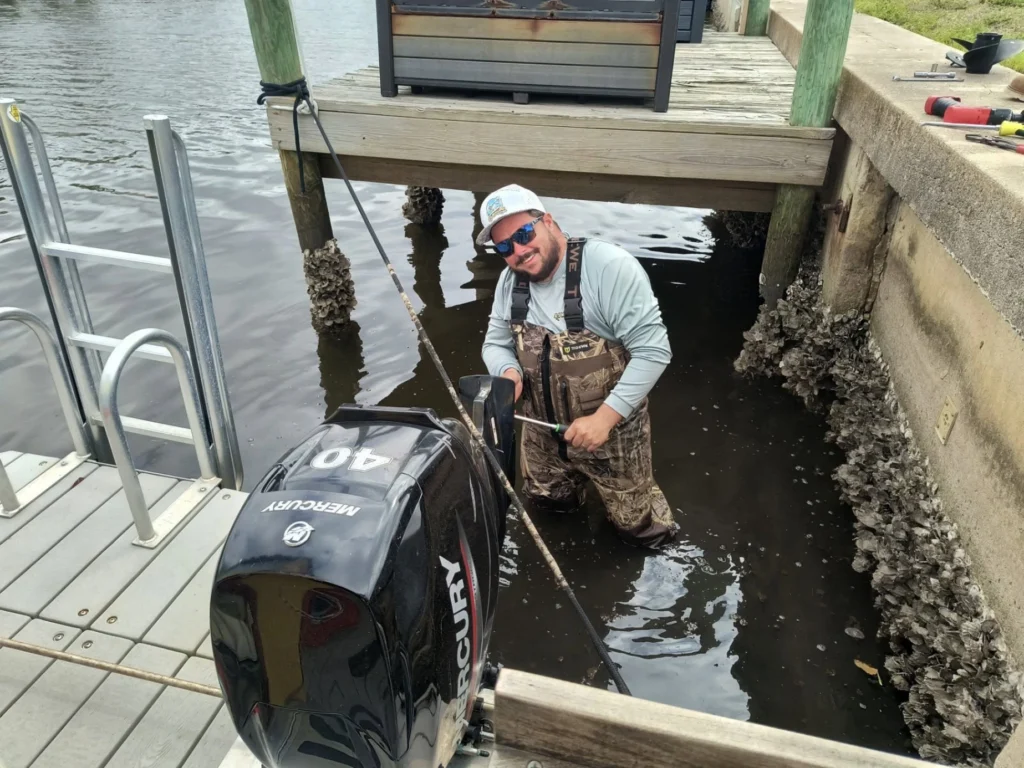
Power-Pole Services We Handle On-Site
Power-Pole work covers new installations, single-to-dual conversions, hydraulic system service, and repair of existing units.
New Power-Pole Installation
New Power-Pole installs require careful attention to transom mounting, hydraulic system routing, and integration with the boat’s electrical system. Installation work includes transom mounting position selection and verification of adequate transom backing, physical Power-Pole unit mounting with marine-grade sealant on every through-hull fastener, hydraulic pump and reservoir mounting in an appropriate location on the boat, hydraulic line routing from the pump to the Power-Pole unit, electrical wiring from the pump to the helm control switch, marine-grade circuit protection at the battery, and system priming and initial function verification.
Dual Power-Pole Installation
Dual Power-Pole setups have become popular on larger boats where two poles provide better holding capability in wind and current. Dual installs include everything covered in a single install plus the second Power-Pole unit, second hydraulic line routing, upgraded pump capacity where needed, dual helm control switch installation, and system verification with both poles operating together.
Power-Pole Hydraulic System Service
Hydraulic system service covers the fluid, pump, and line components that make Power-Pole work. Service includes hydraulic fluid level checks and replacement, hydraulic pump testing and diagnosis when the system is not deploying or retracting properly, hydraulic line inspection for leaks and wear, and pressure system verification.
Power-Pole Repair and Component Replacement
Repair work covers the failure patterns that develop on Power-Pole units over years of use. Common repair categories include hydraulic pump failure requiring pump replacement, hydraulic line leaks at fittings or from line wear, control switch failure or corrosion, deployment spike damage from impact, mounting hardware loosening or corrosion, and control board issues on models with electronic control.
Power-Pole Models We Install and Service
Power-Pole's current lineup covers several models designed for different boat sizes and use conditions.
Power-Pole Blade Series
The workhorse Power-Pole lineup for most flats and bay boat applications. Various models with different pole lengths (8-foot and 10-foot options) to match water depths where you fish.
Power-Pole Pro Series
Larger, more powerful Power-Pole models designed for bigger boats and more demanding conditions.
Power-Pole Micro Series
Compact Power-Pole for smaller boats like kayaks and skiffs where full-size units are impractical.
Power-Pole CHARGE Marine Power Management
Power-Pole's marine power management system that pairs with Power-Pole units and integrates with the boat's electrical system.
Older Power-Pole units welcome
Earlier Power-Pole generations still in service across this coast where parts remain available.
Common Power-Pole Issues We Fix
Power-Pole units have specific failure patterns that develop over years of hard use in saltwater fishing conditions.
-
Hydraulic Fluid Leaks and Line Wear
The hydraulic system that drives Power-Pole deployment is the most complex part of the system and the most common source of service calls. Common hydraulic issues include fluid leaks at line fittings from vibration and connection wear, hydraulic line wear or damage from routing points that rub against boat structure, and slow deployment or retraction from low fluid level or partial line blockage.
-
Hydraulic Pump Failure
The hydraulic pump is the mechanical heart of the Power-Pole system. Common pump issues include pump that runs but produces no hydraulic pressure (internal pump failure), pump that will not run at all (electrical or motor failure), and pump that runs intermittently (electrical connection or control switch issues).
-
Deployment Spike Damage
The spike itself deploys into the bottom and takes wear from impact with hard bottoms including oyster bars, rocky areas, and coral. Common spike issues include bent or damaged spike from impact, worn spike tips reducing holding effectiveness, and spike damage from deployment against structure the operator did not intend to hit.
-
Control Switch and Wiring Corrosion
The helm control switch and wiring are exposed to the marine environment and develop corrosion over time. Common electrical issues include switch failure requiring replacement, corrosion at connectors between the switch and pump, and battery drain from control circuit issues on some models.
-
Mounting Hardware Loosening
Transom-mounted Power-Pole units experience significant load during deployment and retraction. Mounting hardware can loosen over time on boats used hard in demanding conditions, producing pole movement, mounting bolt corrosion, or in extreme cases, damage to the transom itself.
Why Mobile Power-Pole Service Is the Right Approach
Power-Pole units are permanently mounted to the boat's transom with hydraulic and electrical connections integrated into the boat's systems. Removing a Power-Pole for shop service, then reinstalling it, adds significant labor to what should be a straightforward repair. Mobile service handles everything on the boat where the Power-Pole operates.
The other advantage is that certain Power-Pole issues, particularly hydraulic system performance and deployment consistency, benefit from being diagnosed with the unit in its normal operating position on the boat. Shop bench testing of removed components misses issues that only appear under real installation conditions.
Our Process for Power-Pole Installation and Service
Every Power-Pole install and service visit follows the same disciplined process.
-
Boat Assessment and Install Planning
For new installs, we inspect the boat, verify the transom will support Power-Pole mounting, discuss the pole length and model appropriate for your fishing style, and plan the pump mounting location and hydraulic line routing. For dual installs, we plan both mounting locations and verify pump capacity. For repair work, we discuss the specific symptom and quote either a diagnostic or a flat-rate repair.
-
Physical Installation or Component Access
New Power-Pole installs start with transom mounting, working carefully to ensure proper sealant application at every through-hull hole and correct mounting hardware installation. For repair work, we access the affected component, whether that means opening the hydraulic system, accessing the control switch, or working on the mounting hardware.
-
System Setup and Verification
For new installs, we prime the hydraulic system, wire the control switch, and verify correct deployment and retraction speed. For repair work, we verify the repair addresses the specific issue and that no secondary problems have developed. All electrical work uses marine-grade wire and sealed connections.
-
Sea Trial and Function Testing
Every install and every major repair ends with function testing to verify Power-Pole deployment, holding force, and retraction all work correctly. For dual installs, we verify both units deploy together correctly. Any adjustments or final tuning happen during this testing rather than after leaving the job.
Where We Handle Power-Pole Installation and Service
Our Power-Pole service coverage spans Charlotte and Sarasota County. Below are the primary areas where we regularly handle Power-Pole installation and repair.
Port Charlotte
Power-Pole service across the Charlotte Harbor waterfront and residential canal system. Common jobs include new installs on Harbor-used flats boats and bay boats plus hydraulic service work here.
Punta Gorda
Power-Pole installation for boats at Fishermen's Village, Charlotte Harbor marinas, and residential canal docks throughout the peninsula. Single and dual Power-Pole installs handled regularly here.
Venice
Power-Pole service across Venice waterfront homes and Venetian Waterway canals. Common calls include new installs on flats and bay fishing boats plus hydraulic system service on existing setups.
South Venice
Power-Pole coverage for residential boat owners, backyard lifts, and boats stored at private canal docks throughout South Venice. Regular install and repair work from our North Port base.
Englewood
Power-Pole installation for Englewood-area residential docks, marinas along Lemon Bay, and boat storage facilities from Manasota Key inland. Full mobile Power-Pole install and repair capability here.
Placida
Power-Pole service for boat clubs, marinas, and residential owners along Placida Harbor and Gasparilla Sound. Regular flats and inshore fishing boat installs and hydraulic service work for the community.
Rotonda West
Power-Pole service throughout the Rotonda canal system for boats on private lifts and residential canal docks. Common calls include new installs and hydraulic system troubleshooting work here.
Charlotte Harbor
Power-Pole coverage for owners along the northern Charlotte Harbor shoreline, connecting waterways, and inland residential canals. Common calls include Power-Pole installs and hydraulic system repair.
Boca Grande
Power-Pole service to Boca Grande marinas, boat clubs, and private docks along the island. Regular flats fishing boat installs and pre-tarpon-season service verification handled here for local anglers.
Manasota Key
Power-Pole coverage across the Manasota Key waterfront, private residential docks, and inland canal boat owners. Regular flats and inshore fishing boat installs and hydraulic service work.
Beyond This Brand
More Than Power-Pole — Every Major Marine Brand
We're certified across the full range of engines, trolling motors, and electronics on Southwest Florida's water — not just one manufacturer. Tap any logo to see that brand's service page.








Common Power-Pole Questions
How does a Power-Pole work?
Should I get a single or dual Power-Pole setup?
How much does a Power-Pole cost?
Are Power-Poles worth it?
How long does Power-Pole installation take?
Can you install a Power-Pole on any boat?
What is Power-Pole CHARGE?
Need a Marine Mechanic in Proudly serving Sarasota & Charlotte County, FL?
Call or text (239) 333-6722 with your boat make, size, and whether you need a single or dual Power-Pole install (or the specific service you need for an existing setup). We will confirm scope, quote the work, and schedule the visit as fast as possible.