Scheduled Hour Service (20/100/300/500/1,000-Hr) in North Port, Charlotte & Sarasota County, FL
Manufacturer-spec 20, 100, 300, 500, and 1,000-hour outboard maintenance delivered directly to your dock, boat lift, or driveway. Correct fluids, correct filters, correct parts for your specific engine year and model, using the manufacturer's exact procedures.
Scheduled Outboard Maintenance That Comes to Your Boat
Every outboard manufacturer publishes a scheduled maintenance list tied to engine running hours. Keeping up with those intervals is the single biggest factor in how long your outboard lasts, how reliable it stays, and how much your lifetime repair bills add up to. It is also the maintenance category boat owners skip most often, usually because the trip to a shop is inconvenient and the shop queue is weeks out.
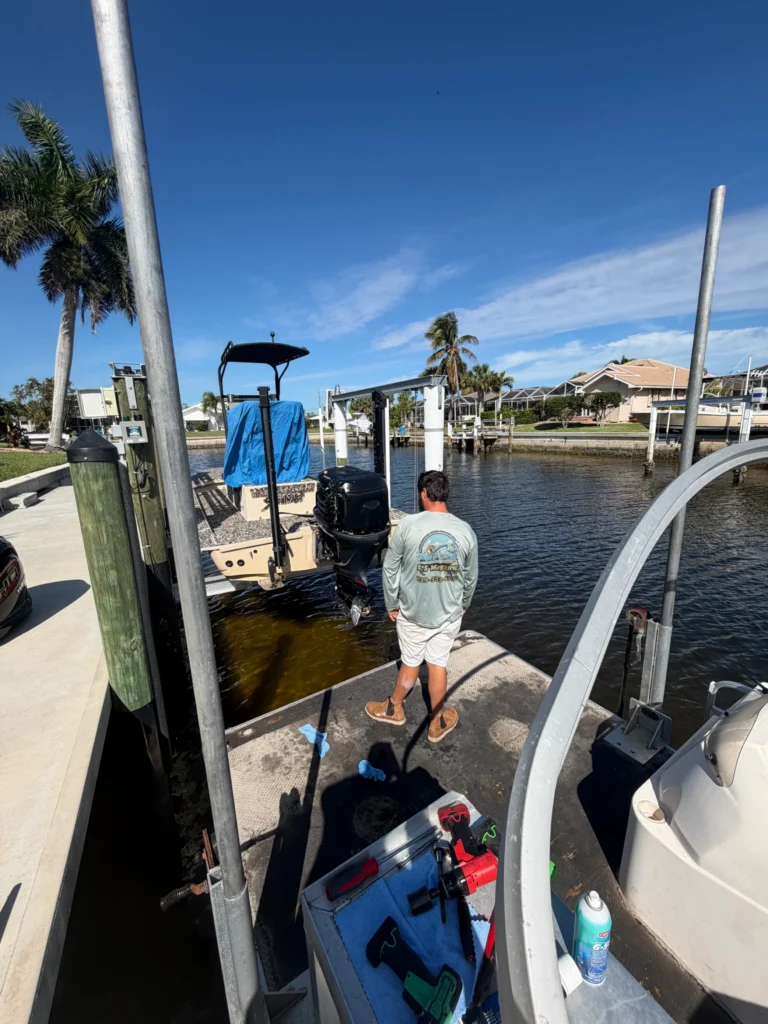
S&S Marine Repair handles scheduled hour service at your boat. Owner and technician Spencer Iannuzzi comes to your dock, driveway, or slip and completes the full interval service on-site, using the correct fluids, filters, spark plugs, impellers, anodes, and inspection procedures for your specific engine brand, model year, and horsepower. Every service is flat-rate priced per engine so you know the cost before we start, and every service is documented so your maintenance history stays current.
Trusted by Boat Owners Across Southwest Florida
About Our Approach to Scheduled Interval Service
S&S Marine Repair is a family-owned mobile marine service based in North Port, Florida. Owner and technician Spencer Iannuzzi handles the scheduled hour service work personally, using manufacturer-spec parts, correct fluids, and the exact procedures published in the service manual for your engine. When you book interval service, the person who quoted the flat rate is the same person who performs the service.
Our approach to scheduled maintenance is disciplined: follow the manufacturer's exact service procedures for your specific engine, use OEM or OEM-equivalent parts with no substitution on critical items, document every service completely so your maintenance history stays current, and give you a heads-up on any developing issues we notice during the inspection portion of the service. That approach is what keeps outboards reliable over 2,000, 3,000, or more hours of use on this coast.
What Each Hour Interval Actually Covers
Each hour milestone covers a specific list of maintenance items. The exact contents vary by brand, model, and year, but the general scope at each stage is defined by manufacturer service manuals. Understanding what each interval covers helps you plan ahead and budget for the next service.
20-Hour Break-In Service
The first service on a new engine after the initial break-in period. Includes engine oil and oil filter change, lower unit gear lube change, and inspection of key fasteners, connections, hoses, and rigging. This service confirms the engine broke in cleanly, catches any early manufacturing or installation issues before they become bigger problems, and resets the maintenance clock for the 100-hour interval that follows. Skipping the 20-hour break-in service can void some manufacturer warranties, so it is not an optional item on a new engine.
100-Hour Service (The Most Common Interval)
The 100-hour service is due every 100 running hours or once a year, whichever comes first. This is the interval most boat owners on this coast think of when they think of scheduled service. The 100-hour service includes engine oil and oil filter change, lower unit gear lube change, fuel filter and water separator replacement, spark plug replacement when due for that specific engine, water pump impeller inspection or replacement depending on brand and model, internal and external zinc anode check and replacement as needed, throttle and shift linkage lubrication, battery connection check and terminal cleaning, and a full visual inspection of hoses, belts, and connections. On this coast, where saltwater use accelerates wear on every wet component, the 100-hour service is what separates outboards that stay reliable from outboards that develop expensive problems.
300-Hour Service
The 300-hour service adds to the 100-hour list. A full water pump kit replacement is standard at this interval on many brands, going beyond the impeller-only replacement of the 100-hour. Fuel system gets a deeper inspection including injector spray pattern testing on EFI engines. Cooling system flush and full inspection including thermostat verification. Timing belt inspection on applicable engines that use one. The 300-hour service catches wear that has developed over the previous 200 hours of use.
500-Hour Service
The 500-hour service adds a timing belt replacement on engines that require one. This alone is often the most important item at the 500-hour interval because a failed timing belt can cause serious engine damage. Includes a full ignition system inspection, oil pump and fuel pump condition check on applicable engines, deeper valve inspection, and on some engines, injector cleaning or replacement. The 500-hour service catches wear on components that operate below the surface of the engine.
1,000-Hour Service
The 1,000-hour service is the big interval. Depending on brand, includes valve clearance adjustment on engines with adjustable valves, complete water pump replacement including the housing, timing belt replacement, deep fuel system service, and any manufacturer-specific long-interval items called out in the service manual for your engine. Some engines get injector replacement at 1,000 hours. Some get a full drive lubrication service. Modern digital-controlled engines often have specific ECM update or system reset requirements at this milestone. The 1,000-hour service resets the engine for another long service run.
Why Interval Maintenance Matters More on This Coast
Saltwater use is significantly harder on marine engines than freshwater use. Salt corrosion attacks cooling passages, wiring connectors, anodes, and any exposed metal component. Ethanol fuel breaks down faster in Florida heat than it does in cooler climates. Boats that sit unused for weeks at a time deal with fuel degradation in the tank, condensation building up in the fuel system, and battery drain that Northern boats often do not experience. Every one of those factors accelerates wear on outboards.
Skipping a single 100-hour service does not usually kill an engine outright. But skipping it repeatedly, or delaying it by six months every cycle, does. Water pump impellers dry out and crack, then fail catastrophically when the engine gets loaded. Fuel filters clog and starve the engine, causing running problems that get misdiagnosed as fuel injection issues. Ethanol residue builds up in fuel systems until injectors and carburetors need full rebuild service. Spark plugs foul, causing misfires that damage catalytic converters on applicable engines. Anodes disappear entirely and salt corrosion starts eating at aluminum components that are much more expensive to replace than an anode was to swap.
The math on interval service is straightforward. A properly performed 100-hour service costs a fraction of what it costs to fix the problems that develop from skipping it. That is why manufacturers publish service schedules in the first place, and why we recommend following them.
How We Handle Interval Service On-Site
Every scheduled service call follows the same process, whether we are doing a 100-hour or a 1,000-hour interval.
-
Hour Verification and Interval Confirmation
You call or text (239) 333-6722 with your engine brand, model, horsepower, and current hour count. We confirm which interval you are due for, quote the flat rate per engine, and schedule the visit. For twin and triple engine setups, we quote each engine and confirm whether all engines are due at the same interval.
-
Correct Parts and Fluid Preparation
Before the visit, we prepare the correct oil grade, oil filter, gear lube, spark plugs, fuel filter, water pump impeller (or full kit for 300-hour and beyond), and any brand-specific items your engine requires. Using the correct parts matters for warranty coverage and long engine life, so we do not substitute.
-
On-Site Service Execution
We arrive at your boat with the parts, tools, and fluid disposal capability needed to complete the service on-site. Interval service is completed following the manufacturer’s exact procedures, in the sequence specified in the service manual. Nothing gets skipped, and nothing gets rushed. Depending on the interval and engine size, service typically takes half a day to a full day per engine.
-
Documentation and Next-Interval Planning
Every completed service gets documented with the hour count at the time of service, the parts and fluids used, and any notes about the engine’s condition. We give you a physical or emailed receipt with everything that was done, plus a projected date and hour count for the next scheduled service so you can plan ahead.
Outboard Brands We Maintain on Manufacturer Schedules
We service scheduled interval maintenance on all major outboard brands used on this coast.
For each brand, we use the manufacturer-specified oil grade, filter part number, gear lube specification, spark plug type, and water pump impeller or kit for your specific engine year and horsepower. Using the wrong oil grade can void warranty coverage. Using the wrong filter can restrict oil flow and damage the engine. Using generic spark plugs can affect ignition timing and running quality. We do not substitute on manufacturer-spec parts because those decisions matter for the engine's long-term health.
Marine Brands We Service & Repair
Factory-level diagnostics and repair for the engines, trolling motors, and electronics powering Southwest Florida boats. Tap any brand for model coverage and brand-specific service details.










Common Questions About Scheduled Outboard Service
What is a 100-hour boat service?
A 100-hour service is the manufacturer’s recommended interval maintenance package for an outboard, typically due every 100 running hours or once a year. It covers engine oil and filter change, lower unit gear lube change, fuel filters, water separator replacement, spark plugs when due for that engine, water pump impeller inspection or replacement, anode check and replacement as needed, throttle and shift linkage lubrication, and a full visual inspection of all hoses, belts, connections, and rigging. On this coast, the 100-hour service is what keeps outboards reliable.
What is a 100-hour service on a Yamaha outboard?
Yamaha’s 100-hour service includes engine oil and Yamaha oil filter change using the specified oil grade for your engine, lower unit gear lube change with Yamalube gear oil, Yamaha fuel filter and water separator replacement, spark plug replacement when due for your specific model, and inspection of anodes, hoses, belts, and connections. Exact contents vary by Yamaha model and year, and Yamaha specifies particular oil grades and filter part numbers by engine. We follow the Yamaha service manual for your specific engine model rather than treating all Yamahas the same.
What is the 100-hour service on a Mercury outboard?
Mercury’s 100-hour service is similar in scope to other manufacturers. Engine oil and Mercury oil filter change using the specified 25W-40 marine oil for four-stroke Mercurys, lower unit gear lube change with Mercury gear lubricant, Mercury fuel filter and water separator replacement, spark plug replacement when due for your specific model, and inspection of anodes, cooling system, drive components, and rigging. Verado and Pro XS models have additional model-specific items at this interval that generic service does not cover. We follow the Mercury service manual for your specific engine.
Should I go by hours or by calendar for scheduled service?
Both. Manufacturers spec service at 100 hours or 12 months, whichever comes first. Boats that only run 30 hours in a year still need annual service because the 12-month rule exists for a reason. Fuel degrades over time whether the engine runs or not. Oil absorbs moisture from humid air, particularly in Florida climate. Salt corrosion continues even when the engine sits idle. Impellers dry out and crack from disuse. Following the calendar rule is important even for low-hour boats.
Do you use factory-original parts on scheduled service?
We use OEM parts and OEM-equivalent parts where appropriate for the specific service. For oil, gear lube, and filters, we use the manufacturer-specified fluid grades and OEM filter part numbers to maintain warranty coverage and long engine life. For wear items like impellers, gaskets, and anodes, we use OEM or high-quality OEM-equivalent parts from suppliers trusted in the marine industry. Every parts choice is documented in the service record so you know exactly what went into your engine.
How do you know what interval my engine is on?
Digital-controlled outboards from the current generation track running hours in the ECM. We pull the actual hour count when we connect for service. Older engines without ECM tracking need an honest owner estimate, ideally cross-referenced with the last documented service if you have records. For boats you just bought without service records, we can do a baseline inspection and treat the current visit as a full 100-hour service to reset the maintenance clock going forward. Documenting where you are starting from makes future intervals easy to track.
Can I do interval service myself?
You can, with the right tools, correct parts, and proper disposal for used oil and gear lube. The two common mistakes owners make are using the wrong oil grade for their specific engine (which can affect performance and void warranty) and skipping the impeller or fuel filter replacement because they look fine visually. Both are hard to catch until they cause bigger problems. Also, spark plug replacement on some modern engines requires specific torque values and threads that are easy to damage without the right tool. If you do your own service, follow the manufacturer service manual exactly.
Where We Handle Scheduled Outboard Service
Our scheduled interval service coverage spans Charlotte and Sarasota County. Below are the primary areas where we regularly perform 100, 300, 500, and 1,000-hour maintenance at customer docks, boat lifts, and residential driveways.
Port Charlotte
Interval service across the Charlotte Harbor waterfront and residential canal system. Regular 100 and 300-hour service scheduling for Harbor-used boats and canal-kept residential fishing vessels.
View CoveragePunta Gorda
Scheduled service for boats stored at Fishermen's Village, Charlotte Harbor marinas, and residential canal docks throughout the peninsula. Regular flat-rate interval service and annual maintenance handled here.
View CoverageVenice
Interval service across Venice waterfront homes and Venetian Waterway canals. Common calls include 100-hour service on Gulf-used boats and annual maintenance on residential canal-kept fishing platforms.
View CoverageSouth Venice
Scheduled service for residential boat owners, backyard lifts, and boats stored at private canal docks throughout South Venice. Regular interval maintenance scheduling from our North Port service base.
View CoverageEnglewood
Interval service for Englewood-area residential docks, marinas along Lemon Bay, and boat storage facilities from Manasota Key inland. Regular 100-hour maintenance and annual service scheduling here.
View CoveragePlacida
Scheduled outboard service for boat clubs, marinas, and residential owners along Placida Harbor and Gasparilla Sound. Regular fishing-boat maintenance visits and annual interval service handled here.
View CoverageRotonda West
Interval service throughout the Rotonda canal system for boats stored on private lifts and residential canal docks. Regular 100 and 300-hour scheduling for canal-kept residential boats in the area.
View CoverageCharlotte Harbor
Scheduled service for owners along the northern Charlotte Harbor shoreline, connecting waterways, and inland residential canals. Regular interval maintenance and full preventative service coverage handled here.
View CoverageBoca Grande
Interval service for Boca Grande marinas, boat clubs, and private docks along the island. Regular scheduling for annual outboard service, pre-tarpon-season maintenance, and post-storm engine service.
View CoverageManasota Key
Scheduled outboard service for Manasota Key waterfront boats, private residential docks, and inland canal boat owners. Regular 100-hour maintenance and annual interval service scheduled here.
View CoverageSee What We Have Fixed
Hello world!
Welcome to WordPress. This is your first post. Edit or delete it, then start writing!
Boat Down? We Come to You.
Call or text (239) 333-6722 with your engine brand, model year, horsepower, and current hour count. We will confirm which interval you are due for, quote the flat rate, and schedule the visit as fast as possible.