Marine Engine Diagnostics in North Port, Charlotte & Sarasota County, FL
ECM scans, live-data checks, no-start troubleshooting, and full outboard diagnostic work handled at your dock, lift, or driveway. We identify the actual fault before anyone spends money on parts, using manufacturer-level diagnostic tools for every major outboard brand.
Marine Diagnostics Delivered Directly to Your Slip
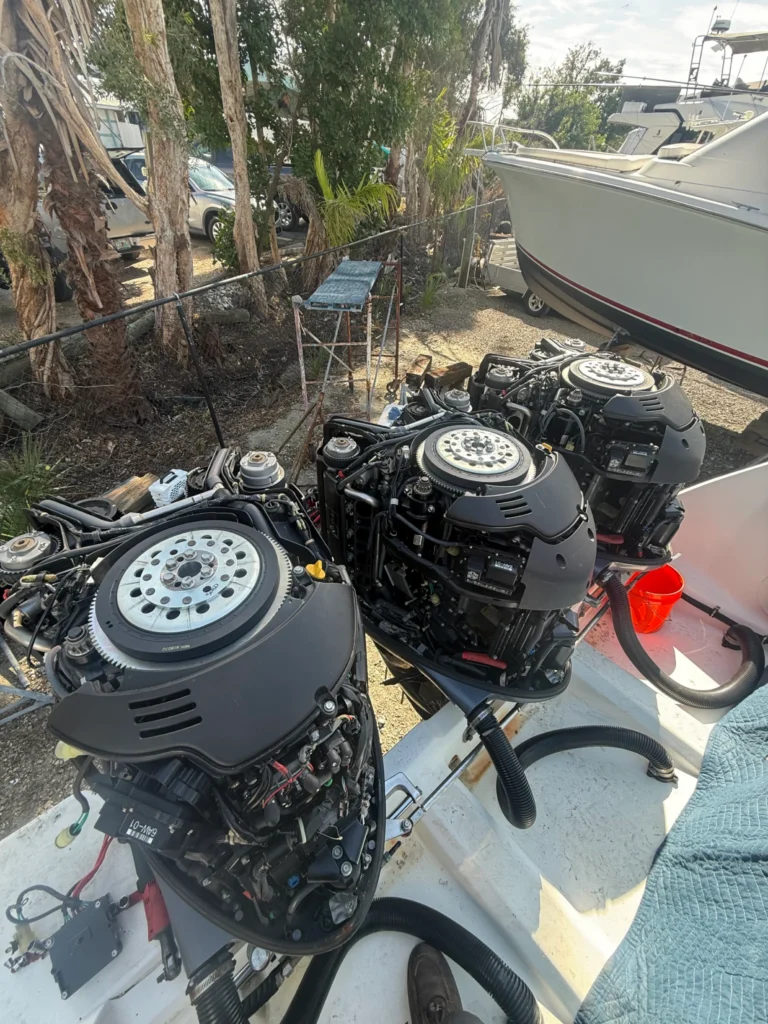
Modern outboards are essentially waterproof computers. When something goes wrong, the fastest, cheapest, and most reliable path to a fix is almost always a proper diagnostic scan before anyone changes a single part. A check engine light, a no-start condition, an overheat alarm, or a change in how the engine runs can point to a wide range of underlying causes. Guessing means throwing parts and money at the wrong problem.
S&S Marine Repair provides mobile marine engine diagnostics across Charlotte and Sarasota County. We plug into your engine's ECM, read error codes, run live-data checks, verify sensor readings against manufacturer specifications, and give you a clear written answer on what is wrong, what caused it, and what it will take to fix. No parts get replaced until we know what actually failed. The written diagnostic report is yours whether or not you have us do the repair.
Trusted by Boat Owners Across Southwest Florida
About Our Approach to Marine Engine Diagnostics
S&S Marine Repair is a family-owned mobile marine service based in North Port, Florida. Owner and technician Spencer Iannuzzi handles the diagnostic work personally, using manufacturer-level tools and disciplined analytical process on every engine. When you book a diagnostic, the person who quoted the fee is the same person who plugs into your engine, reads the codes, runs the tests, and writes the report.
Our approach to diagnostics is straightforward: identify the actual fault before recommending any parts replacement, use factory-level tools rather than generic scanners, verify sensor readings against manufacturer specs rather than assuming a code is accurate, and give an honest report on what the engine actually needs. That approach saves boat owners from unnecessary parts replacement and gets them a real answer rather than a guess.
What a Proper Marine Engine Diagnostic Actually Covers
A diagnostic done right goes much further than a quick code read. Anyone can plug in a scanner and pull a fault code. The value of a real diagnostic is understanding what the code actually means, which sensor is truly at fault, and whether the code is the cause of your problem or just a downstream symptom of something upstream. That difference is why proper diagnostics prevent thousands in unnecessary parts replacement.
ECM Scanning and Fault Code Analysis
Modern outboards store fault codes in the engine control module when sensors report values outside normal ranges. We scan the ECM using manufacturer-level diagnostic software for your specific engine brand, retrieve current and historical fault codes, and interpret what each code actually means in the context of your engine’s specific model year and configuration. The same fault code can point to different underlying causes on different engine models, so context matters.
Live Sensor Data and Real-Time Diagnostics
Beyond stored codes, we monitor live sensor data while the engine runs. This includes RPM, fuel pressure, coolant temperature, oil pressure, ignition timing, throttle position, engine load, and any other sensor the engine reports. Comparing actual sensor readings against manufacturer specifications catches faults that have not yet triggered a code, and identifies which sensor is genuinely failing versus which sensor is reporting a real problem upstream.
Compression and Mechanical Testing
Not every engine problem shows up in the ECM. Mechanical diagnostics include compression testing on all cylinders, cylinder balance analysis, and vacuum testing on applicable engines. These identify mechanical wear, valve seat issues, ring wear, and internal problems that no scanner will report because they are physical rather than electronic.
Fuel, Ignition, and Charging System Testing
We test fuel system pressure and flow at the injectors and rail, verify fuel pump output under load, check spark voltage and coil resistance on each cylinder, test stator output on outboards that use one, and verify charging system output including alternator or stator function and voltage regulator behavior. These are the systems most likely to fail in ways that produce running problems, and they need to be tested rather than assumed.
Cooling and Wiring Integrity
Cooling system flow, thermostat function, and temperature sensor accuracy get verified with the engine at operating temperature. Wiring integrity gets checked at the common corrosion points that cause intermittent faults on this coast, including the powerhead connector, the trim harness plug, and the shift-and-throttle sensor connections.
Why Mobile Diagnostics Often Beat Shop Diagnostics
There is a specific reason mobile diagnostics often produce better results than shop diagnostics on this coast. Certain faults only appear when the boat is in real water, connected to real electrical load, at real operating temperature, and in its normal operating configuration. A shop bench-testing an engine on jacks or a garden hose often misses issues that show up on the dock.
Charging systems load differently under real conditions than they do in shop tests. A stator or alternator that reads fine under bench conditions can fail under real electrical load. Cooling systems behave differently on a shop hose than in salt water at operating temperature. Wiring corrosion faults show up when the harness is at temperature and vibrating in the actual boat configuration. Intermittent faults that never appear at the shop show up regularly when the engine is under normal running conditions. Diagnosing at your dock catches those.
The other advantage is immediacy. When we identify the fault, we can often start the repair on the same visit rather than adding another shop trip. That collapses the diagnostic-to-repair timeline from weeks to hours in most cases.
How Our On-Site Diagnostic Process Works
Every diagnostic follows the same disciplined sequence, whether we are troubleshooting a simple no-start or a complex intermittent issue.
-
Symptom Discussion and Fee Confirmation
You describe what the engine is doing on the phone or via text. We ask specific questions to narrow the possible causes, quote the diagnostic fee up front so you know the cost before we head out, and schedule the visit. For complex intermittent issues, we discuss what data logging or return visits might be needed.
-
Initial Inspection and ECM Connection
On arrival, we do a brief walk-around to inspect the engine, check fluid levels, note any visible wiring or connector issues, and confirm the engine hours and any relevant history you have. We then connect to the ECM using the correct diagnostic interface for your engine brand and begin the scan.
-
Diagnostic Testing and Root-Cause Identification
We work through fault codes, live sensor data, mechanical tests, and system-level checks in the sequence appropriate to your symptoms. The goal is to identify the actual root cause, not just the surface symptom. This process typically takes one to two hours, longer for complex intermittent problems that require broader testing.
-
Written Report and Next Steps
Every diagnostic ends with a clear written summary of what we found, what caused it, what the fix requires, and what it costs. That report is yours whether or not we do the repair. If the fix is small and we can complete it on-site during the visit, we quote it and complete the work after your approval. If parts need ordering, we quote the repair and schedule the return visit. If the diagnostic reveals a large or non-economical repair, we give an honest recommendation on repair versus replace.
Outboard Brands We Diagnose With Factory-Level Software
We carry manufacturer-level diagnostic tools and software for every major outboard brand used along this coast.
For older two-strokes without ECM systems, we troubleshoot the traditional way using a test light, multimeter, compression gauge, timing light, and vacuum tester. The tools are different, but the analytical process is the same: identify the actual failure through methodical testing before replacing anything.
Marine Brands We Service & Repair
Factory-level diagnostics and repair for the engines, trolling motors, and electronics powering Southwest Florida boats. Tap any brand for model coverage and brand-specific service details.





Common Marine Engine Diagnostic Questions
Do I really need a diagnostic before repair?
Almost always yes. A modern outboard has dozens of sensors and interconnected systems, and a check-engine light or performance issue can point to a wide range of underlying causes. Guessing means throwing parts and money at the wrong problem. A proper diagnostic isolates the actual cause first, then you fix it once and move on. The alternative, parts-swapping without diagnostics, is how repair bills get out of control.
How much does a marine engine diagnostic cost?
We quote diagnostic work as a flat fee before the visit so you know the cost upfront. The fee depends on the engine brand, the depth of the scan required, and whether we are diagnosing a single symptom or a system-wide issue with multiple potential causes. Free phone estimates before scheduling. Complex intermittent problems that require data logging or extended testing get discussed upfront so there are no surprises.
How long does a diagnostic take?
Most diagnostics finish in one to two hours on-site. Straightforward fault code diagnosis on modern engines is often quicker. Complex intermittent issues, particularly electrical problems that only appear under specific conditions, can take longer. We always agree on a time cap before starting so the diagnostic never becomes an open-ended job. If we cannot identify the fault in the initial visit, we discuss what data logging or extended testing options make sense.
Can you diagnose electrical issues that are not engine-related?
Yes. Boat electrical issues, wiring faults, charging problems, and accessory failures all fall under our regular diagnostic work. We cover the full boat electrical system, not just the engine, because many engine symptoms turn out to be electrical problems upstream. Battery drain issues, charging system problems, and gauge or accessory faults all get diagnosed the same way as engine faults.
What if you cannot find the problem in one visit?
Rare, but it happens on intermittent faults that only appear under specific conditions. If we cannot reproduce the fault on the first visit, we can install a data logger, review the recorded data after the fault occurs, and return with a targeted plan. We do not charge for chasing a symptom that will not appear. Genuine intermittent electrical problems sometimes require this approach because you cannot fix what you cannot observe.
Do you diagnose issues on older two-stroke outboards?
Yes. Older two-stroke outboards without ECMs require a different diagnostic approach because there is no computer to interrogate. We test fuel, spark, compression, and timing systematically using traditional diagnostic tools. Most two-stroke issues fall into a small handful of common failure modes, and disciplined testing identifies the actual problem without needing modern electronics.
What is the difference between a scan and a full diagnostic?
A scan reads the stored fault codes and clears them. A full diagnostic uses the codes as a starting point, then verifies which components have actually failed and which are working correctly through live-data testing, mechanical testing, and system-level checks. Two very different services. A scan tells you what codes are present. A diagnostic tells you what is actually wrong. The distinction matters because the same code can mean different things depending on what else is happening in the engine.
Where We Run Marine Engine Diagnostics
Our marine diagnostic coverage spans Charlotte and Sarasota County. Below are the primary areas where we regularly handle diagnostic work at customer docks, boat lifts, and residential driveways.
Port Charlotte
Diagnostic service across the Charlotte Harbor waterfront and residential canal system. Common calls include overheat alarms, misfire troubleshooting, and performance diagnostics on regularly used Harbor boats.
View CoveragePunta Gorda
Marine engine diagnostics for boats at Fishermen's Village, Charlotte Harbor marinas, and residential canal docks throughout the peninsula. Regular ECM scans and no-start diagnostic work handled here.
View CoverageVenice
Diagnostic service across Venice waterfront homes and Venetian Waterway canals. Common calls handle Gulf-side saltwater engine issues, cooling system diagnostics, and charging system troubleshooting work.
View CoverageSouth Venice
Diagnostic service for residential boat owners, backyard lifts, and boats stored at private canal docks throughout South Venice. Regular ECM scans and running-problem diagnostics from our North Port base.
View CoverageEnglewood
Diagnostic coverage for Englewood-area residential docks, marinas along Lemon Bay, and boat storage facilities from Manasota Key inland. Full mobile diagnostic capability for common outboard problems.
View CoveragePlacida
Marine engine diagnostics for boat clubs, marinas, and residential owners along Placida Harbor and Gasparilla Sound. Regular no-start and performance diagnostic work for the local fishing community here.
View CoverageRotonda West
Diagnostic service throughout the Rotonda canal system for boats stored on private lifts and canal docks. Common calls include no-start troubleshooting and fuel-related running problem diagnostics.
View CoverageCharlotte Harbor
Diagnostic coverage for owners along the northern Charlotte Harbor shoreline, connecting waterways, and inland residential canals. Common calls include preventative diagnostics and post-maintenance verification testing.
View CoverageBoca Grande
Diagnostic service to Boca Grande marinas, boat clubs, and private docks along the island. Regular calls handle tarpon-season no-start issues, engine performance diagnostics, and pre-season verification work.
View CoverageManasota Key
Diagnostic coverage across the Manasota Key waterfront, private residential docks, and inland canal boat owners. Regular ECM scanning, no-start diagnostics, and performance troubleshooting for the area.
View CoverageSee What We Have Fixed
Hello world!
Welcome to WordPress. This is your first post. Edit or delete it, then start writing!
Boat Down? We Come to You.
Call or text (239) 333-6722 with your engine brand, model year, and the symptoms you are seeing. We will confirm the diagnostic fee and schedule the visit as fast as possible.